

A township in the glen
Glenmore is the site of the remains of a township called Beglan, which is thought to date back to around 1740.
Drain pipes
Did you know the UK used to use timber pipes? Trees felled in nearby Abernethy were used to make drain pipes for London streets.
The magnificent trees of the Cairngorms forests were in demand as cities grew, and new industries flourished.
Ship building
In 1782, the Duke of Gordon, who owned Glenmore, offered the chance to operate a timber business in the glen.
By 1784, the Glenmore Company had bought the rights to the timber and set up a shipyard at the mouth of the river Spey. Logs were stored on Loch Morlich until there was enough water to float them down the river to the shipyard.
They were used to build 47 large ships before the company completed their contract in 1805. One of them was called Glenmore in honour of the source of its timbers.
Glenmore is still a working forest today, but the timber is used for building and fence posts instead of ships, and it travels by road instead of down the river.
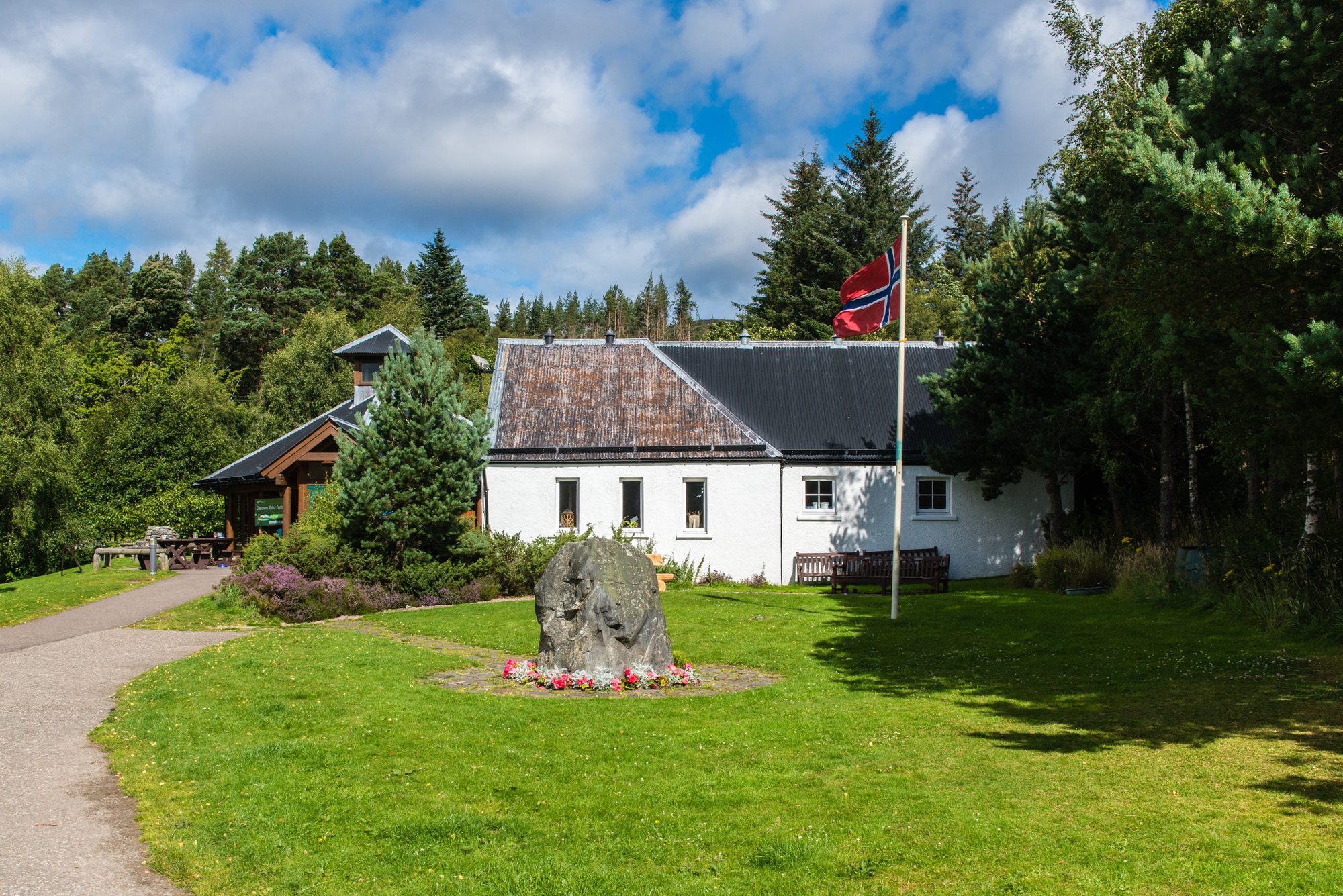
World War Two: the Kompani Linge
During World War Two, Norwegian resistance fighters trained in the Glenmore area as part of the top-secret Special Operations Executive (SOE), becoming known as Kompani Linge.
They used the forests and the shores of Loch Morlich to prepare for daring raids against the Nazi forces occupying Norway.
Just outside the Glenmore Visitor Centre you’ll find a memorial to these resistance fighters.