
Conservation: a fine balance
As the largest land managers in Scotland, we are responsible for managing the national forests. We do this on behalf of Scottish Ministers in line with the Scottish Government’s 50-year vision. The vision sets out sustainable forestry that conserves and enhances the environment, and that delivers benefits for people and nature.
We are leaders of Sustainable Forest Management in Scotland. This independent industry standard recognises that sometimes, for foresters to be able to do their work, they will need to use plant protection products (PPPs). More commonly known as 'pesticides', these PPPs help land managers to protect crops and habitats.
Why we use PPPs
As the climate changes, the conditions that support pests – and diseases – improve. So, for the health of our forests now and in the future, it’s vital that we manage these threats as best we can.
The products available to us are all approved for use in Scotland by the UK Health & Safety Executive. They are commonly used in the agricultural sector and in horticulture, as well as in amenity areas and home gardens. Far smaller amounts are used in forestry as well as more targeted application.
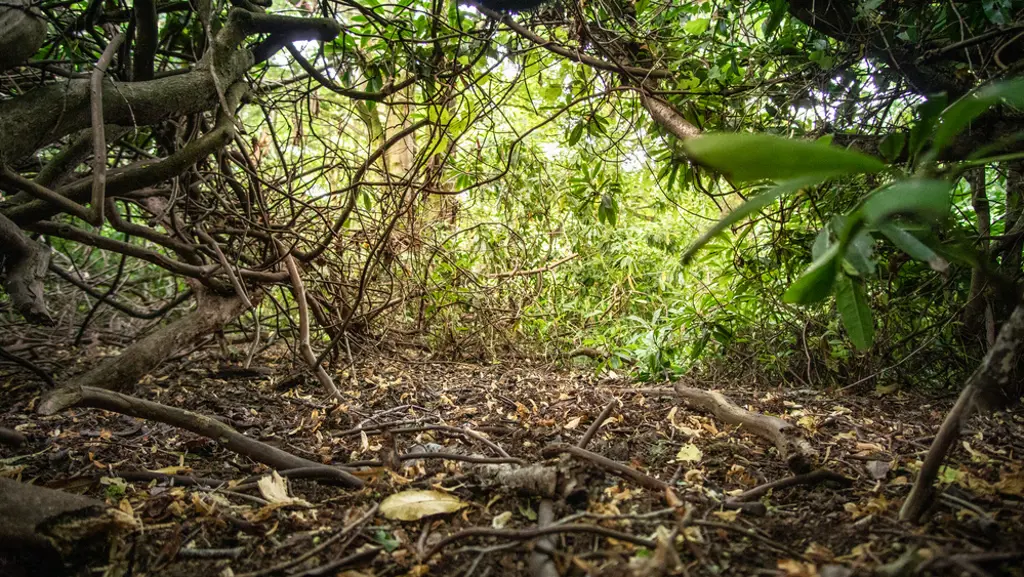
We use PPPs to control tree pests like large pine weevil (Hylobius abietis). We also use them in ancient and semi-natural woodlands, such as temperate rainforests, to reduce weed damage from plants like Rhododendron ponticum and Japanese knotweed. They are always used at the recommended quantities and with the techniques set by the UK Health & Safety Executive as being safe.

When to use PPPs
Choosing when to use PPPs can be difficult. Overall our aim is to find alternatives to their use where possible or, when their use is necessary, to limit and reduce their use. We take extreme care to minimise any potential environmental impact.
To find the best option for each situation, we take an Integrated Pest Management (IPM) approach that allows us to work through the choices. We use this approach when managing, for example, the tree pest Hylobius abietis (the large pine weevil). This pest is estimated to cause £5 million worth of direct losses across the UK each year. It significantly slows the re-establishment of future forest crops.

Finding the best solution
By monitoring weevil populations, we know when an increase in numbers means that we need to act to reduce the impact of weevil damage. Our expertise as professional foresters, combined with both our detailed knowledge of local forest environments and the robust research that underpins the IPMS, allows us to determine the most appropriate solution for the situation.
These options include (in order of preference):
Minimising the use of PPPs
As part of our ongoing effort to minimise the use of PPPs, we continue to work with partner land managers across British and Irish public and private sectors to find alternatives.
Some of the partner land managers we work with are:
- Coillte
- Scottish Enterprise
- Highlands and Islands Enterprise
- the Scottish Government
- the Scottish Funding Council
Through continued research, we hope to see the development of innovative, non-chemical and cost-effective ways of reducing the damage caused by pests. We hope this will greatly improve the sustainable management of woodlands in Scotland.